
Violin or Cello: Which Instrument Should You Choose?
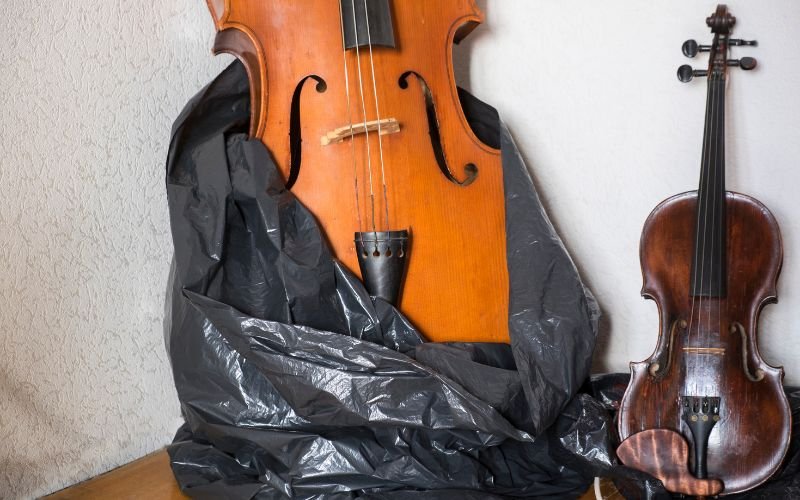
Violin or cello: on paper, these two instruments seem quite similar. They belong to the same family, are played with a bow, and are found in many ensembles. But once you hold them, the experience is completely different: the sound, the posture, and the feel of playing are worlds apart.
Small, lightweight, and easy to carry, the violin captivates with its clear tone and its versatility in performing both classical repertoire and contemporary music. The cello, on the other hand, appeals to those who love deep tones and a warmer sound.
So, are you more of a future violinist or cellist? Differences, prices, musical repertoire: Newzik helps you find the instrument that will set your heart racing.
Key Takeaways
The violin and the cello differ in size, playing posture, and tone.
Alongside them, the viola and the double bass round out the family of bowed string instruments.
The violin is available in both acoustic and electric versions.
It's possible to get started without knowing music theory, but a few lessons are recommended to master the proper techniques.
A violin is generally less expensive than a cello. Renting an instrument allows you to try it out before buying it.
Both the violin and the cello can be learned at any age, by children and adults alike.
Violin and Cello: What Are the Differences?
The violin and the cello belong to the bowed string family. They are played with a bow and do not have frets, but their size, range, and playing position vary from one instrument to another.
A different size and playing position
The most noticeable difference is the instrument's shape.
The violin is smaller. It is played while standing or sitting, resting on the shoulder and held under the chin.
The cello is played while seated. It rests between the legs and is supported on the floor by an adjustable endpin.
Lightweight and compact, you can take the violin with you wherever you go. However, it takes a little time to get used to holding it: you have to learn to hold it without tensing your neck, raising your shoulder, or locking your wrist.
The cello offers a more stable playing position. Its weight rests on the floor rather than on the musician’s body, which may feel more comfortable. On the other hand, you need enough space to set up and handle the bow without feeling cramped.
The gameplay experience is also different:
On a violin, the notes are close together, and finger placement must be very precise;
On a cello, the left hand makes wider movements along the fingerboard.
And what about the viola in all this?
Often confused with the violin, the viola is slightly larger, heavier, and has a deeper tone. It is held in the same way—on the shoulder and under the chin—but requires slightly broader movements due to its size.
Do you like the way the violin sounds, but prefer a rounder, less high-pitched tone? The viola might be an interesting alternative. In an ensemble, it often serves as a bridge between the high and low registers.
Distinct registers and timbres
Each instrument has a distinctive tone.
The violin plays in the highest register. Its tone can be bright, lively, light, or very intense.
The cello produces lower, deeper, and warmer tones, while still being able to reach fairly high in the upper register.
The sound of the cello is often compared to the human voice, especially in the middle register. The violin, on the other hand, stands out easily in an ensemble thanks to its higher register.
In an orchestra, their roles are often divided as follows:
The violin carries the melodic lines, the fast passages, and numerous virtuosic passages.
The cello provides the bass line, accompanies the other sections, or takes the melody itself.
Which violin should you choose: acoustic or electric?
An acoustic violin produces sound through the vibrations of its strings, which are transmitted to the wooden soundbox. It is the most common type of violin for beginners and for playing the classical repertoire.
The electric violin has little or no soundbox. The sound is picked up and amplified, which allows you to play with headphones (depending on the model) or add effects.
Violin or cello: Which is easier to learn?
Neither is really any easier. The challenges of playing the violin and the cello are quite different, and how they feel depends a lot on each person’s posture, body type, and natural aptitude.
When playing the violin, you must first learn to hold the instrument without tensing your neck or shoulders. Finger placement also requires a great deal of precision: even a slight misalignment can cause the note to be off-key. The first few weeks are therefore often devoted to posture, intonation, and producing a clear sound.
The cello sometimes seems more accessible because it rests on the floor and provides a more stable position. However, the finger spans are wider, the hand movements are more extensive, and the instrument requires more space. You also need to learn to properly coordinate your right arm, left hand, and sitting posture.
In both cases, the bow poses a real challenge at first. It must be held in the correct position, move at the right speed, and apply even pressure to the strings. If too much pressure is applied, the sound becomes harsh; if not enough, it lacks sustain.
How do you choose between the violin and the cello?
Depending on your musical tastes
First, listen to both instruments in a variety of styles: their repertoire is vast, but their timbres remain very different.
The violin plays an important role in classical music, traditional music, jazz, folk, and even pop and rock. It is often associated with fast solos and prominent melodic lines.
The cello also has a vast classical repertoire, ranging from chamber music to concertos. It is also featured in film scores, pop, rock, and contemporary arrangements.
Depending on body type and comfort
Violins and cellos come in several sizes, allowing children to start with an instrument suited to their size.
Arm length, hand size, and shoulder flexibility are all factors to consider. Some students prefer the more compact position of the violin. Others feel more comfortable sitting behind a cello.
Comfort is a very personal matter. A position that feels natural to one person may feel restrictive to another. It’s bestto try out both instruments, with the help of a teacher or a luthier. They can also check the size you’ve chosen and see if you’re experiencing any tension in your back, neck, or wrists.
Depending on the practice conditions
The violin is easier to transport and takes up little space at home. The cello requires more organization, particularly when it comes to storage, travel, and the space needed to play while seated.
Before making your choice, think about your daily life: Will you need to take public transportation with your instrument, climb stairs, or move it every week? 👉 Techniques for improving your violin playing.
How much should you budget for a violin or a cello?
Violins are more affordable to buy. Entry-level models are available for around 100 euros, compared to about 500 to 1,000 euros for a cello.
The price varies depending on the quality of the wood, the finishes, the manufacturing process, and the included accessories. For handcrafted models, the luthier’s craftsmanship and reputation also factor in. A very low price may seem tempting when you’re just starting out on a tight budget, but a poorly adjusted or low-quality instrument can quickly make learning more difficult.
Don't want to buy your first instrument right away? Renting is a good way to get started, especially for a child who will eventually need a larger instrument or for an adult who's still on the fence. Depending on the music school, expect to pay around 15 to 35 euros per month for a student violin and 30 to over 50 euros for a cello.
Accessories to consider purchasing or to check for when renting the instrument:
Essentials: bow, case or cover, rosin;
Depending on the instrument: a shoulder rest or cushion for the violin, a endpin for the cello;
Very useful for working: a music stand for holding your sheet music or viewing your digital sheet music on a tablet.
💡 Good to know: Some starter kits already include everything you need.
Then there’s the cost of lessons, which varies greatly depending on the option you choose: a municipal conservatory, a community music school, or a private teacher. Don’t forget about the maintenance of your instrument, either . Strings wear out, the bow hair needs to be replaced, and a visit to the luthier can be helpful to check the bridge, the pegs, or the instrument’s overall condition 👉 Learning the violin without a teacher: our tips for self-study.
Violin or Cello: Which Instrument Is Right for You?
The violin might be right for you if…
you prefer clear, high-pitched sounds;
Are you looking for an instrument that takes up little space?;
The position on your shoulder feels natural to you.
The cello might be right for you if…
you prefer lower registers;
you prefer to play while sitting;
Its size and transport aren't a problem for you.
Work on your sheet music more easily with Newzik
Would you like to start learning the violin, cello, or another musical instrument? The Newzik app helps you keep all your sheet music in one place, annotate it, and organize it by piece, lesson, or project. You can add your fingering charts, mark difficult passages, use the metronome, and access your documents on your tablet or smartphone.
With Newzik, start organizing your music library and much more today.
FAQ – Your Questions About the Violin and Cello
Which instrument should you choose for a child?
The first criterion is their interest. Whether it’s the violin, guitar, piano, or cello, each instrument can offer a child a great deal—as long as they enjoy playing it and are willing to devote time to it. It’s best, therefore, to avoid imposing a choice and instead let them listen, try out different instruments, and then decide together with you. Playing an instrument helps develop listening skills, memory, coordination, and concentration, among other things.
Is it possible to start playing the violin or cello as an adult?
Yes. It’s entirely possible to start learning a musical instrument as an adult. Making progress may require a little patience, especially when it comes to coordinating movements and finding time to practice regularly. On the other hand, adults often grasp instructions more quickly, work toward a specific goal, and are better at organizing their practice. A few lessons with an instructor are helpful at the beginning to correct posture and bow hold and to avoid developing bad habits.
Can you play the violin without knowing music theory?
Yes, but we need to distinguish between music theory and technical training. You can start playing the violin without knowing how to read sheet music, as long as you receive guidance on posture, bow hold, and finger placement. Practicing by ear can also be very helpful for memorizing melodies and improving intonation.
What size violin or cello should you choose?
The size depends on the musician’s arm and hand length, age, and posture. For children, there are fractional sizes ranging from 1/16 to 4/4, depending on the instrument. A teacher or luthier should verify that the student can reach the notes without strain or forced movement.
What is the difference between a cello and a double bass?
The double bass is larger and has a lower pitch than the cello. It is usually played standing up or on a high stool, whereas the cello is played while seated, with the instrument placed between the legs.
What is a violin or cello mute used for?
The mute is placed on the bridge to reduce the instrument’s volume. This makes it possible to practice in an apartment or at times when you want to keep the noise down. However, the sound becomes more muffled: while it helps reduce noise, it does not make the violin or cello silent.
Which instrument is in the highest demand in an orchestra?
The violin is the most common instrument, with two sections and more musicians than for the cello. But that doesn’t mean it’s easier to join an orchestra: requirements vary by ensemble, and competition can also be fiercer among violinists.
