
Music Conservatory: All Our Tips for Preparing to Enroll in a Program
When you’re an aspiring musician and want to make music your career, getting into a conservatory is like reaching a milestone in your professional journey. Whatever your calling, pursuing a program at a conservatory allows you to earn training or a certified degree in the music industry. And certification means there are selection criteria. To be admitted to an advanced program at a conservatory, it is therefore often necessary to take an entrance exam in the form of an audition.
What are the admission requirements? How does the entrance exam work, and how can you best prepare for it? Information, tips, and tricks: Newzik guides you through the process so you can stay organized and successfully gain admission to a conservatory with confidence.
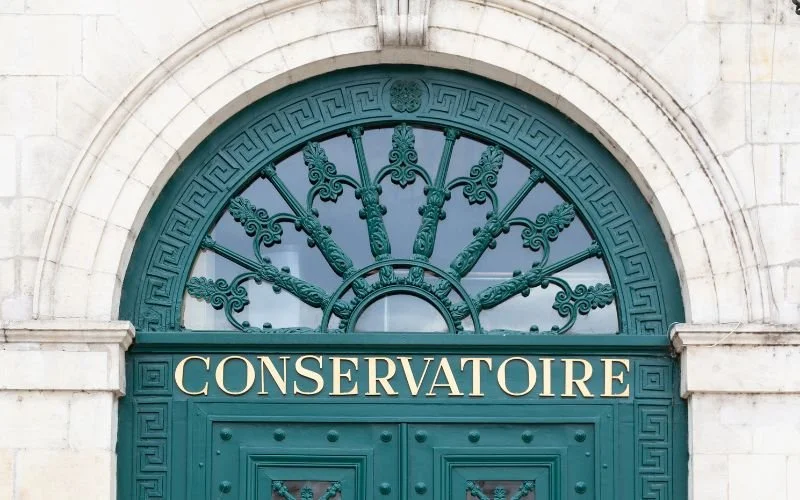
The Conservatory: How Does It Work?
The various categories of music education institutions in the region
In addition to the two national conservatories of music (CNS) located in Paris and Lyon, France has an extensive network of arts education institutions. These include regional conservatories (CRR) and departmental conservatories (CRD), as well as municipal conservatories (CRC).
Depending on the institution, a conservatory may be accredited to offer training in music, theater, and dance.
Good to know:
Note that the CRC and CRD (municipal and departmental conservatories) are primarily intended for artistic training for amateurs. As for regional and national conservatories, they offer professional training programs and generally require applicants to pass a highly selective entrance exam.
Types of Programs Offered at Conservatories
Open to students of various ages and skill levels, music conservatories divide their programs into cycles:
a first-level program focused on introducing the youngest children to music,
a second cycle designed to allow students to further their studies and earn their first degree (the BEM, or Brevet d’Études Musicales),
a third-cycle program, open to both amateurs and aspiring professionals, which leads to professional musician status andthe award of an advanced degree (the CEM, Certificate of Musical Studies).
In addition to their studies at the conservatory, many students play an instrument in bands or orchestras.
What is the admissions process like at the conservatory?
Selection criteria that vary by institution
Overall, there is no single, definitive way to be accepted into a conservatory. Each institution has its own admission policy based on the number of applications received and the number of available spots. This can also vary depending on the instruments the applicant wishes to study ( piano, for example, is often in high demand!).
Here are the three main admission options, depending on the context:
The institution has a limited number of spots: an entrance exam or a lottery is held for highly sought-after programs. This procedure applies in particular to conservatories with a national or regional reach.
The institution has enough spots to accommodate everyone who wants to enroll in the program, but it wants to assess the candidates’ motivation and skill level through an exam.
The school is open to all enrolled students who have paid their tuition fees to the conservatory.
Good to know:
For admission to graduate or postgraduate programs, some conservatories require applicants to have previously completed a course of higher education (music instruction with a certified teacher or specialized studies such as a bachelor’s degree in musicology or an undergraduate degree earned as an amateur).
The entrance exam: passing one (or more) auditions
If you wish to enroll in a conservatory to begin a professional program, you will need to take an entrance exam to gain admission to the music training program.
An entrance exam for a conservatory takes the formof an audition (or a series of different tests), depending on the required level and the selection criteria in place.
What is expected during an audition for admission to the conservatory?
The performance of one or more pieces, which may be assigned by the conservatory or chosen freely. Some institutions require both a freely chosen piece and an assigned piece.
A written test to assess the candidate’s music theory skills, followed by an oral question-and-answer session to gauge the candidate’s motivation. Knowledge of music theory or the ability to sight-read sheet music—several different tests may be administered here.
What do you need to know to prepare for a conservatory entrance exam?
Music Theory and Notation
During a conservatory entrance exam, the jury first assesses whether the candidate has mastered the basics of music theory, namely:
The musical notation, particularly the rules of musical notation (and not just those specific to the instrument you play).
Understanding the rythm, harmony, and scales.
Musical keys.
Sight-reading tests are often required as part of conservatory entrance exams. It’s hard to overlook this essential foundation of theoretical knowledge.
Learning Music Theory: Learn More About Music Theory Classes.
Playing a musical instrument
In addition to testing your theoretical knowledge, conservatory admission committees evaluate your performance skills—that is, your ability to play an instrument.
Piano, guitar, violin, harp, singing… Aspiring musicians choose their preferred instrument based on the program they wish to pursue. The goal? To convince the jury of their potential through the performance of one or more pieces. Technique, fluidity of playing—everything is carefully evaluated.
Specifically, what will the selection committee be evaluating?
→ Technique: your mastery of the instrument or your voice. The jury is there to evaluate your pitch, your sense of rhythm, and the ease with which you perform. A fluid performance—even if you hit one or two wrong notes—will make a more positive impression than a very mechanical performance that reveals a lack of experience.
→ Musicality: Beyond technique, the conservatory jury is looking to feel an emotional connection when you perform your piece. The quality of your performance reveals not only your musical ability but also your musical personality.
→ Responsiveness: A jury may sometimes ask you to replay a passage, requesting that you vary an element of the score, such as the tempo or tone. In such cases, you must be able to respond quickly to their request and adjust your performance accordingly.
→ Motivation: When the jury evaluates your performance, they will also pay close attention to your demeanor and will be all the more convinced if you are motivated. A commanding stage presence and a confident attitude will leave a good impression.
5 Practical Tips for Preparing for Your Conservatory Music Audition
1. Practice.
That's the foundation. If you're passionate about music and want to enroll in an advanced program at the conservatory, it means you've already learned the fundamentals of music.
But no matter what your skill level, practice is essential. Review your music theory lessons, go over sheet music (both easy and challenging pieces), learn one or more pieces…your goal is to feel confident and ready to play naturally, even under stressful conditions.
Being judged on a piece may seem simple on paper, but it requires mastering every technical nuance in case the jury asks you a surprise question during the audition.
Pro tip:
“Not everyone is named Mozart! Reviewing what was covered in class at home is the best way to more easily grasp the concepts covered in class. Perseverance and hard work are the keys to success,” explains Isabelle Viennot, a teacher at the Reims Conservatory.
Our tip: Listen to yourself to identify your strengths and weaknesses!
Recording yourself during rehearsals and listening back is a surefire way to improve. With the interactive Newzik app, you can record your performances, save them, and listen to them whenever you want to track your progress.
2. Choose a song that stands out from the crowd… but one you know inside and out
Sometimes the conservatory gives you the freedom to choose the piece of music you’ll perform at the audition. This may seem like good news, but be careful not to choose just any piece.
→ Choose a piece that matches your musical skill level and that you feel comfortable with. Your goal? To showcase your full potential. If you’re taking a singing audition, select a song that suits your vocal range.
→ Avoid choosing very well-known pieces from the classical repertoire, such as Mozart’s most famous sonatas, which other candidates are likely to play.
→ Don’t limit yourself to just one piece: learn more than one. Prepare a selection of two or three pieces from different repertoires that you’d like to perform in case the jury suddenly asks you to switch pieces.
Our 9 tips for learning your sheet music easily.
3. Take lessons with a professional
The jury isn't trying to determine whether you canlearn a piece of music by heart, but whether you have strong musical skills.
So, if you haven’t already done so, taking a course at a music school or with a specialized coach is highly recommended. Having guidance during your studies and practice sessions as you prepare to apply to a conservatory will help you feel confident on the day of your audition.
Follow the experts' sound advice carefully and practice regularly.
💻 Are you taking music lessons with a teacher online?
Use the Newzik Education platform to share your work and interact more easily with your teacher or classmates:
Interactive exercises with annotation sharing.
Remote progress tracking.
Storing data in a secure cloud.
Take advantage of features designed specifically for an educational experience.
Learn and practice your sheet music without having to juggle multiple formats, thanks to Newzik.
4. Use tools to help you prepare
Preparing for a conservatory entrance exam requires discipline and organization. Digital tools can help you save time, structure your work more effectively, and track your progress on a daily basis.
With the Newzik app, you can, among other things:
to annotate pieces in order to memorize fingerings, dynamics, or the teacher’s instructions,
to use the built-in metronome to work on rhythmic precision,
to record your rehearsals so you can analyze your performance and identify areas for improvement.
Check out the top 3 features that Newzik users love most.
5. Show the jury your passion and stay confident
If there’s one thing the jury knows about you the moment you walk through the door of the audition room, it’s that you—like most of the other candidates—are motivated by the idea of becoming an accomplished or professional musician.
During the Q&A session, explain to the jury that enrolling in a conservatory program is not just a matter of professional motivation, but also a personal passion and even a life goal. This is very likely to make a difference.
♫ Newzik: a sheet music app perfectly tailored for music conservatories
The Newzik App meets the essential criteria for learning and teaching at a conservatory.
Dynamic score reading to make sight-reading easier.
Managing a multi-user library.
Add real-timeshared annotations.
Recording of songs and automatic conversion of content into interactive sheet music.
Try the Newzik app for free and become a maestro before you even start music school!
FAQ – Frequently Asked Questions About Enrollment at the Conservatory
What are the entrance exams for the conservatory?
Admission requirements vary by institution. Admission may be based on an application review, an interview, a performance audition, or a music theory test, particularly for advanced programs at regional or national conservatories.
What are the admission requirements for the conservatory?
Admission requirements depend on the applicant’s age, the chosen discipline, and the desired level of study. Some programs are open to beginning musicians, while others (admission to graduate or postgraduate programs, or to national or regional conservatories) require a proven mastery of a musical discipline.
How much does a year at the conservatory cost?
Tuition fees vary depending on the conservatory, place of residence, and program of study. Some charge up to several hundred euros per year (not including the cost of the instrument).
What level of proficiency is required to enroll in the conservatory?
It is not always necessary to have prior experience to enroll in a conservatory program. Many municipal or departmental conservatories welcome young beginners, while advanced or specialized programs require an entrance exam, a prior diploma, and a proven level of technical proficiency.
