
Music Theory and Digital Tools: Complementary Music Learning Techniques
With the proliferation of digital tools and apps, there’s a tendency to think that you can learn music without studying music theory. But contrary to what some people believe, simply turning on your tablet and clicking a few buttons isn’t enough to master reading sheet music, playing an instrument, or writing music.
Although they may seem more fun and simple at first glance, digital tools are not designed to teach musical theory, but rather to support and assist musicians in their learning process.
No matter your skill level or age, discover how to build on your theoretical music theory knowledge using digital tools, and follow our practical tips to make learning music easier!
Music Theory and Digital Technology: Complementary Approaches
Music theory techniques and the use of digital tools: two approaches that address different needs
Taught at conservatories and music schools around the world, music theory helps students master the fundamentals of music theory. Although children often find it tedious, this training remains essential before taking up an instrument or singing.
As the first step in musical training, music theory is primarily used to read the notes on a score. Just as learning the letters of the alphabet and grammar is essential for delving into books, mastering music theory is important for understanding rhythms, bars, dynamics, and scales in music.
Although it is not a requirement for playing an instrument, music theory remains a universal and effective method for learning music, whether for children or adults who are just starting out.
Taking lessons with a specialized instructor or coach is often recommended to ensure high-quality instruction.
Recommended reading: *Music Theory Without a Teacher: A Clear Method and Selected Melodies for Beginners* by Roger Evans, a practical guide to support self-study.
🎼Just starting to learn how to read sheet music? Try the Newzik App!
Intuitive and dynamic sheet music reading, score annotations, and audio recordings: the Newzik app makes it easier for you to learn how to read music.
The Limits of 100% Digital Music Education
Some beginners see videos, apps, and digital features as revolutionary ways to play an instrument without having to learn the notes or understand the structure of a sheet of music.
However, even though it is very useful, digital technology cannot replace a musician’s expertise. Rather, a digital app serves as a guide to help you progress in your musical education.
Technically, digital tools have some limitations if you don't apply the fundamentals of music theory:
You can play a piece without really understanding its structure. The risk? You might end up unable to read sheet music without the help of an app.
Digital media often encourages skimming (through listening to tutorials, watching videos, and playing along). As a result, we expend less cognitive effort and take less time to fully grasp the material. The result: the knowledge is not retained long-term in the aspiring musician’s brain.
In short, digital tools make execution easier, but they don’t always make things easier to understand.
🎵 Need some help learning the basics of music theory? Check out our tips for better understanding the rules of music theory.
Digital tools: useful resources to support (not replace) music education
Digital technology: a real boost for making the leap from music theory to the stage
Do you have a solid grasp of the basics of music theory but are looking for a tool to help you read sheet music more fluently?
From an operational standpoint, whether on stage or during group rehearsals, digital apps designed to assist with reading sheet music offer several advantages:
Make it easier to read notes on a tablet: ditch loose sheets of paper and opt for the clarity of a high-resolution screen. On a screen, digital documents have the advantage of being clear and easy to view.
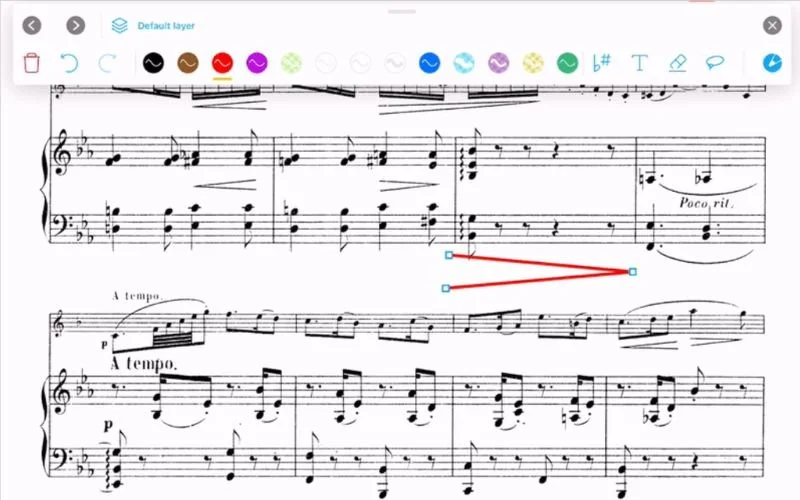
Add annotations to virtual sheet music: underline an important passage, circle notes to emphasize… You can dynamically add notes to your documents to make reading easier!
Collaborate more easily with other musicians or singers: whether on stage or in rehearsal, it’s important to work from a document that’s up to date and shared by all members of the group. Connected apps let you share content in real time. If you share your notes, all your bandmates will have access to them. Isn’t that just magical?
💻 Real-time annotations, transposition, and interactive sheet music customization: discover the top 10 features available on the Newzik App and Newzik Web.
A new approach to music education for teachers
In addition to the support available to experienced musicians, music teachers who teach instrumental performance—especially to children—find digital tools to be a valuable resource.
Digital apps are excellent tools for engaging students. The rigorous nature of music theory is transformed into an intuitive game on the screen. Thanks to these apps, teachers can have their students work on pieces of music they enjoy and allow them to simulate the process of composing a piece (using tools like Launchpad or GarageBand on the iPad). Intuitive and dynamic, playing a virtual instrument and computer-assisted composition are perceived as games by children. Learning then takes place more independently, as students are motivated.
Nicolas Olivier, a music teacher and trainer, believes that new technologies help children learn music more easily. For example, he gives his students fun exercises to do.
“Using tablets has changed everything. Before, progress was very slow, moving from one class to the next. Now, once students have gotten the hang of the apps and are following the instructions, 90% of them finish their homework at home from one week to the next. And in class, we can move forward and try out other exercises.”
🎹 There’s nothing like games and activities to introduce kids to music. Check out our top 5 apps for learning music while having fun!
Combining theory and digital tools: the art of blending these two approaches to enhance learning
Learn the basics of music theory with an app
If you're new to music, the first step is to learn the basics of music theory. Notes, rhythms, dynamics: it's a good idea to take the time to fully understand the structure of a musical score.
There is no single “magic formula” for learning music theory; the key is to find the learning method that works best for you. In addition to personalized instruction from a teacher, digital tools can be very helpful when you’re just starting out. Digital apps can help you with reading music and even composing it.
In CAM computer-assisted music), electronic music artists use computer software to assist in their productions.
You can use NewzikApp to guide you step by step. Zoom in on the sheet music, mark sections to practice on your staves, have fun identifying the notes at your own rythm play the music along at the same time. Thanks to Newzik, the art of music theory is just a click away!
📖 Looking to learn a piece of music quickly? Follow our practical tips to memorize your sheet music more easily.
3 Ways to Use Tools Effectively Without Neglecting Technique
1. Start with the sound, then go back to the theory
An interactive sheet music readerlets you listen to, view, and even slow down the tempo of a piece without needing multiple devices.
After working on a passage using an app, take a few minutes to:
Identify the rythm: determine whether the passage is steady or syncopated. For example, a series of quarter notes creates a steady flow, while eighth notes or rests add movement to the piece. You can clap your hands to mark the beats.
Identify intervals: look at the intervals between the notes. Does the melody move slowly or make larger leaps (third, fifth, etc.)? In general, a large interval draws attention within a musical phrase.
Understand the structure: try breaking the passage down into short sentences. Is there a recurring pattern? Any variations? Many passages follow a “question/answer” structure, with a first sentence followed by a second that completes it.
2. Alternate between screens, instruments, and physical materials
The danger of digital technology is that it encourages passivity.
Whether you’re playing the piano, the guitar, the violin, or singing, using a tool doesn’t replace the physical act of playing the instrument. You need to physically internalize what you learn with the help of these tools.
For each session, alternate between virtual practice and hands-on practice:
50% of the time using the tool (reading, listening, analyzing),
50% practical work with the instrument in hand, or reading the structure of a printed score with a pencil in hand.
3. Use certain key features to make progress
Digital tools are particularly effective at identifying bottlenecks and helping us make faster progress.
Rhythm challenges→ Practice interactive exercises using a built-in metronome or visual cues to identify the bars. Start slowly, then gradually increase the tempo.
Slow reading→ practice using simplified sheet music or display tools (note by note, measure by measure). The goal is to improve your fluency without making it too difficult for yourself.
Pitch issues→ Play the audio version of the score to help you identify the section that needs correction. Analyze the pitch of the notes to compare what you’re playing with the expected result. Practice by correcting the section in question in real time.
Establish a workout routine→ use tracking tools or reminders to make sure you work out regularly. Even 10 minutes a day can be enough.
Having trouble memorizing a piece? → Work on small sections, repeating them over and over, and slowing down if necessary. Digital tools let you practice a specific passage without wasting time.
Our advice? Choose a suitable feature, then focus on it for a few minutes.
With Newzik, learning music is more seamless and interactive!
Whether you're just starting out in music or you're a teacher, Newzik is here to help you simplify your music teaching methods. Reading music, interpreting dynamics, listening, sharing sheet music: NewzikApp, Newzik Web and Newzik Education are your best allies.
With Newzik's tools, you can:
adapt the sheet music to your instrument and tempo.
listen to, compare, and play your sheet music with dynamic accompaniments,
annotate and customize your sheet music according to your interpretation,
Offer interactive exercises to your students while tracking their progress in real time.
