
What is the real purpose of music theory?
What if music theory were useful for much more than you think?
Music theory often has a bad reputation—it’s seen as too theoretical, too academic. Yet behind these exercises, which are often perceived as tedious, lies a genuine language for understanding and making music your own. Whether it’s understanding a rythm, finding your way through a piece, playing with other musicians, or shaping your own melodies, music theory goes far beyond simply reading notes.
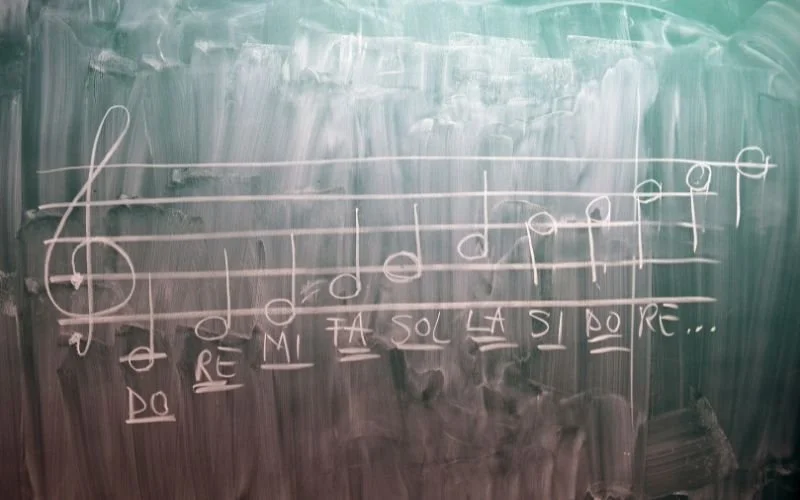
Music theory: what is it all about?
Music theory encompasses all the conventions used in a score: staves, clefs (such as the treble clef), symbols, and signs that indicate what to play, when, and how. It is a visual language that allows music to be represented. Notes, rhythms, rests, tempo… it is through music theory that music can be read, written, and shared among musicians.
Good to know: While it’s recommended that children learn music theory from a young age, it’s entirely possible to pick it up as an adult, regardless of your musical background. We’ve also listed 5 good reasons to start playing an instrument as an adult.
What is the purpose of music theory, beyond reading sheet music?
Music theory plays a role in many aspects of learning music. But beyond knowing how to read sheet music, what difference does it really make in terms of playing music?
Mastering the rythm
Music theory helps you better understand the rythm music and all its components: note values (quarter notes, eighth notes…), rests, and regularity. It helps you find your place within the beat and stay in time, whether playing alone or with other musicians.
Understanding Melodies
Music theory helps you understand a melody, not just follow it note by note. With practice, you’ll be able to read it and hear it in your head, identify intervals and points of tension. This makes pieces easier to memorize, but above all, more logical to play. And as a bonus, it’s also an excellent foundation for developing your musical ear.
Finding your way through a song
Music theory allows you to understand the structure of a piece in just a few seconds:
intro, verse, chorus, bridge
repetitions, variations
modulations
Instead ofmemorizing it, you know where you are in the music.
Compose your own songs
When you love playing music, you often find yourself wanting to compose your own songs. But between a melody idea, a chord progression, or a rythm in your head, it’s not always easy to know what to do with them. Which tonality ? Which notes will work well together? Here again, music theory is your best friend. You can easily structure your ideas, write down what you hear, and develop a piece without just winging it.
Connect with other musicians
While music theory helps you understand a score instantly, it also helps you step back from it. Without a basic understanding, a rehearsal can quickly turn into: “Wait, let’s start over from the part that goes ta-ta-ta…”.A reference point that seems obvious to some, but much less so to the rest of the group.
With music theory, instructions become more precise: “We’ll start again at measure 32, in D minor.” A simple instruction that allows all the musicians to immediately find their place.
Want to join a band? Learn the musical terms you need to know to play with other musicians.
Correct mistakes more quickly
You feel that a passage “doesn’t sound right,” but you can’t figure out what the problem is. Without a basic understanding of music theory, you sense that something is off… but it’s hard to pinpoint exactly what. Is it a wrong note? A rythm issue rythm A chord doesn’t work?
Music theory actually helps you pinpoint what’s holding you back more quickly. A rhythmic misalignment, an incorrect interval, or a harmony that sounds off are easier to spot. The result: you waste less time searching, and you make progress more easily in your playing.
Whether you're learning piano, guitar, violin, or even singing, music theory is essential in every aspect of your musical journey. From your very first notes to playing in a group, it guides musicians through every stage of their musical development, regardless of their musical style.
How can you learn music theory today?
Good news: learning music theory doesn't necessarily have to be like the highly academic classes many people imagine. Today, there are many ways to approach it, often in a more intuitive and, above all, more engaging way.
Learning by playing your instrument Music theory becomes much more enjoyable when it’s directly linked to playing. It’s easier to understand what a rythm, a chord a scale is scale play them.
Useinteractivetools: apps, videos, online exercises, digital sheet music… There are now plenty of resources available for learning music theory and finding the method that works best for you.
Working with pieces you truly love What’s the secret to staying motivated? Working with music that you enjoy playing and understanding. Music theory then becomes a fun tool, rather than a mandatory step.
Everything You Need to Know About Music Theory Classes
Maxime Proix, a certified music and choral singing teacher, works with young children every day to help them learn music.
“Music is a language, and learning it is similar to learning a language. Notes combined with rhythms can be compared to syllables, a group of notes to a word, and so on. […] The playful aspect eliminates any sense of apprehension or demotivation when faced with a score. As with any form of teaching, learning through play—by bringing the work and concepts covered to life—will make the basics of music easier and more understandable.”
Read the full interview with Maxime Proix
Music theory: a much more versatile tool than it seems
Whether you’re a conservatory student, an amateur musician, or a professional, learning music theory is often seen as a necessary step—and sometimes a bit daunting. When you first start playing an instrument, all you really want to do is play your first songs, improvise, or join a band. Yet, as many musicians come to realize over time, mastering music theory can quickly become essential.
Beyond simply reading sheet music, music theory also teaches you how to play with other musicians, improvise by understanding chords and keys, memorize a piece more quickly, and keep up with a rehearsal without feeling lost after just a few bars.
🎶 Want to improvise, play in a group, compose, or simply learn to read sheet music? TheNewzik app is for you! You can annotate your sheet music, share it in real time, transpose it, and much more—all from your tablet.
Join thousands of other musicians in putting theory into practice, and discover digital sheet music
